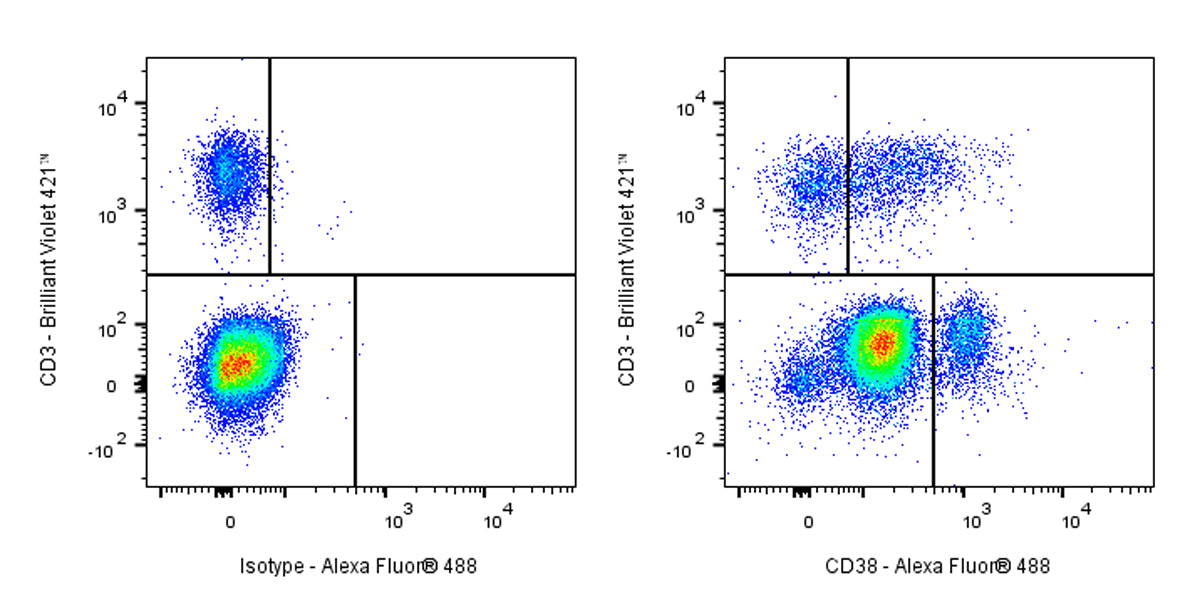
Alexa Fluor® 488 Mouse Anti-Human CD38 Antibody (S-1966-20)
Alexa Fluor® 488 Mouse Anti-Human CD38 Antibody (S-1966-20)

Product Details
Product Details
Product Specification
| Host | Mouse |
| Antigen | CD38 |
| Synonyms | ADP-ribosyl cyclase/cyclic ADP-ribose hydrolase 1; 2'-phospho-ADP-ribosyl cyclase; 2'-phospho-ADP-ribosyl cyclase/2'-phospho-cyclic-ADP-ribose transferase; 2'-phospho-cyclic-ADP-ribose transferase; ADP-ribosyl cyclase 1 (ADPRC 1); Cyclic ADP-ribose hydrolase 1 (cADPR hydrolase 1); T10; CD38 |
| Immunogen | Recombinant Protein |
| Location | Membrane |
| Accession | P28907 |
| Clone Number | S-1966-20 |
| Antibody Type | Mouse mAb |
| Isotype | IgG1,k |
| Application | FCM |
| Reactivity | Hu |
| Positive Sample | Human peripheral blood leukocytes |
| Purification | Protein G |
| Concentration | 0.2 mg/ml |
| Conjugation | Alexa Fluor® 488 |
| Physical Appearance | Liquid |
| Storage Buffer | PBS, 1% BSA, 0.3% Proclin 300 |
| Stability & Storage | 12 months from date of receipt / reconstitution, 2 to 8 °C as supplied |
Dilution
| application | dilution | species |
| FCM | 5μl per million cells in 100μl volume | Hu |
Background
CD38, also known as cyclic ADP ribose hydrolase, is a multifunctional transmembrane glycoprotein expressed on various immune cells such as T lymphocytes, B cells, and plasma cells. It functions as both a receptor and an enzyme, playing a crucial role in cell adhesion, signal transduction, and the regulation of intracellular calcium levels. CD38 catalyzes the metabolism of nicotinamide adenine dinucleotide (NAD+), generating molecules like cyclic ADP-ribose (cADPR) and ADP-ribose (ADPR), which are involved in calcium signaling and immune responses. It is highly expressed on myeloma cells and is used as a therapeutic target for multiple myeloma and other hematological malignancies. Additionally, CD38 is implicated in various physiological processes, including inflammation, phagocytosis, and antigen presentation, making it a subject of interest in both immunology and oncology.