WB result of ADAM22 Recombinant Rabbit mAb
Primary antibody: ADAM22 Recombinant Rabbit mAb at 1/1000 dilution
Lane 1: mouse brain lysate 20 µg
Secondary antibody: Goat Anti-Rabbit IgG (H+L), HRP conjugated at 1/10000 dilution
Predicted MW: 100 kDa
Observed MW: 70-100 kDa
ADAM22 Recombinant Rabbit mAb (S-3201-8)
ADAM22 Recombinant Rabbit mAb (S-3201-8)
Price:
Regular price
$100 USD
Regular price
Sale price
$100 USD
Unit price
per
For shipping services or bulk orders, you may request a quotation.
Secure checkout with

View full details
Product Details
Product Details
Product Specification
| Host | Rabbit |
| Antigen | ADAM22 |
| Immunogen | Recombinant Protein |
| Location | Cell membrane |
| Accession | Q9P0K1 |
| Clone Number | S-3201-8 |
| Antibody Type | Recombinant mAb |
| Isotype | IgG |
| Application | WB, IHC-P |
| Reactivity | Hu, Ms, Rt |
| Purification | Protein A |
| Concentration | 0.5 mg/ml |
| Conjugation | Unconjugated |
| Physical Appearance | Liquid |
| Storage Buffer | PBS, 40% Glycerol, 0.05% BSA, 0.02% sodium azide |
| Stability & Storage | 12 months from date of receipt / reconstitution, -20 °C as supplied |
Dilution
| application | dilution | species |
| WB | 1:1000-1:5000 | Ms, Rt |
| IHC-P | 1:2000 | Hu, Ms |
Background
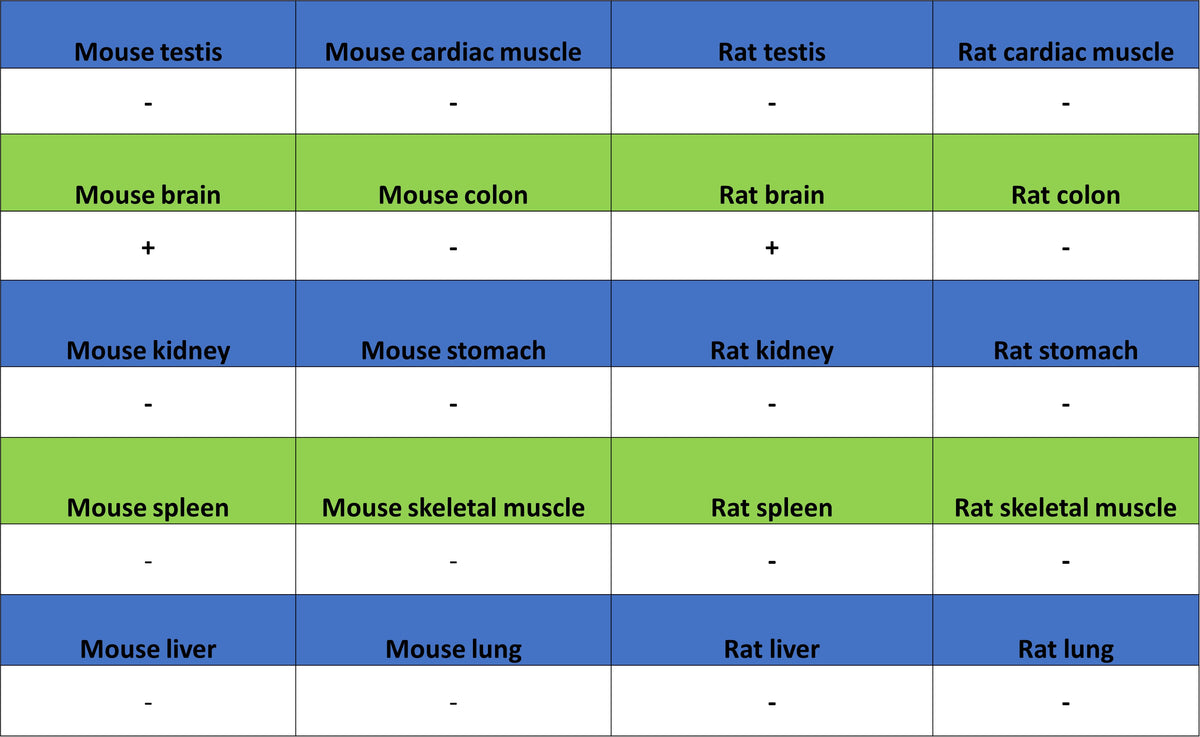
ADAM22 (a disintegrin and metalloproteinase domain-containing protein 22) is a unique non-proteolytic member of the ADAM family; because key zinc-binding motifs in its metalloproteinase catalytic domain are mutated, it has lost proteolytic activity and functions primarily as a cell surface adhesion molecule or receptor. The protein is highly expressed in the nervous system and is a key regulator of synaptic transmission: as the principal receptor for the secreted neuronal protein LGI1, the two form a 2:2 heterotetrameric complex through binding of the integrin-like domain of ADAM22 to the EPTP domain of LGI1, which then anchors to the postsynaptic density and regulates AMPA receptor-mediated synaptic transmission. Dysfunction of the LGI1-ADAM22 complex is directly linked to multiple neurological disorders: LGI1 gene mutations cause autosomal dominant lateral temporal lobe epilepsy (ADLTE), while LGI1 autoantibodies trigger limbic encephalitis characterized by memory loss and seizures. ADAM22-deficient mice exhibit severe ataxia, insufficient peripheral nerve myelination, and lethal seizures, further confirming its central role in both the central and peripheral nervous systems. Beyond the nervous system, ADAM22 shows tumor-promoting effects in various cancers: in head and neck squamous cell carcinoma, it promotes epithelial-mesenchymal transition (EMT) and lymphatic metastasis through integrin signaling; in nasopharyngeal carcinoma, it drives metastasis via RAC2-mediated activation of the PI3K/Akt pathway; in pituitary adenomas, it promotes tumor progression by activating integrin β1 and FAK/PI3K and FAK/ERK signaling through its disintegrin domain; and in breast cancer, it acts as a direct target gene of SRC-1 to mediate endocrine therapy resistance and is an independent predictor of disease-free survival that is independent of estrogen receptor status. Notably, ADAM22 is expressed in normal brain tissue but lost in high-grade gliomas, and its disintegrin domain can inhibit cell proliferation through integrin-dependent pathways, suggesting that its functions are highly tissue- and context-dependent.
Picture
Picture
Western Blot
WB result of ADAM22 Recombinant Rabbit mAb
Primary antibody: ADAM22 Recombinant Rabbit mAb at 1/1000 dilution
Lane 1: rat brain lysate 20 µg
Secondary antibody: Goat Anti-Rabbit IgG (H+L), HRP conjugated at 1/10000 dilution
Predicted MW: 100 kDa
Observed MW: 70-100 kDa
Immunohistochemistry
IHC shows positive staining in paraffin-embedded human brain. Anti-ADAM22 antibody was used at 1/2000 dilution, followed by a HRP Polymer for Rabbit IgG (ready to use). Counterstained with hematoxylin. Heat mediated antigen retrieval with Tris/EDTA buffer pH9.0 was performed before commencing with IHC staining protocol.
IHC shows positive staining in paraffin-embedded mouse brain. Anti-ADAM22 antibody was used at 1/2000 dilution, followed by a HRP Polymer for Rabbit IgG (ready to use). Counterstained with hematoxylin. Heat mediated antigen retrieval with Tris/EDTA buffer pH9.0 was performed before commencing with IHC staining protocol.