2μg (R: reducing condition, N: non-reducing condition).
ACSS2 His Tag Protein, Human
ACSS2 His Tag Protein, Human
Price:
Regular price
$200 USD
Regular price
Sale price
$200 USD
Unit price
per
For shipping services or bulk orders, you may request a quotation.
Secure checkout with

View full details
Product Details
Product Details
Product Specification
| Species | Human |
| Synonyms | ACAS2, Acetyl-coenzyme A synthetase |
| Accession | Q9NR19 |
| Amino Acid Sequence | Met1-Gln701 with His Tag at the N-Terminus |
| Expression System | E.coli |
| Molecular Weight | 70-100kDa (Reducing) |
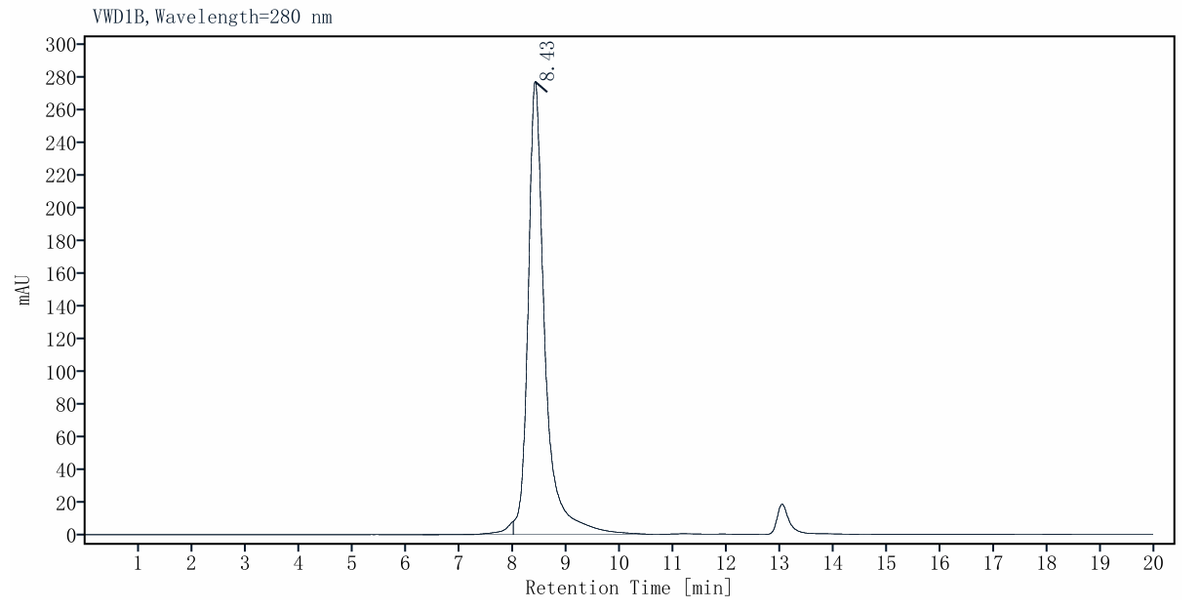
| Purity | >95% by SDS-PAGE &HPLC |
| Conjugation | Unconjugated |
| Tag | His Tag |
| Physical Appearance | Liquid |
| Storage Buffer | 50mM Tris, 150mM NaCl, PH7.5, 1mM DTT, 10%Glycerol |
| Stability & Storage | Stable for 12 months upon stored at -80℃ from the date of receipt. And avoid repeated freeze-thaws cycles. |
| Reference | 1. Activin receptor-like kinases: a novel subclass of cell-surface receptors with predicted serine/threonine kinase activity. Oncogene, 8(10), 2879-2887. |
Background
ACSS2 (Acyl-CoA Synthetase Short-Chain Family Member 2) is a key metabolic enzyme that catalyzes the ligation of acetate to coenzyme A (CoA), generating acetyl-CoA in an ATP-dependent reaction. It is primarily localized in the cytoplasm and nucleus and plays a critical role in cellular metabolism, particularly under stress conditions such as hypoxia, nutrient deprivation, and lipid metabolism dysregulation. ACSS2 enables cells to utilize exogenous acetate as an alternative carbon source when glucose and other nutrients are scarce. The acetyl-CoA produced by ACSS2 serves dual functions: it enters de novo lipogenesis for fatty acid synthesis and provides acetyl groups for histone acetylation, thereby regulating gene expression epigenetically. Under nutrient stress, particularly amino acid deficiency, SIRT2 deacetylates ACSS2 at lysine residue K271, leading to its ubiquitination and proteasomal degradation, which suppresses lipogenesis.
Picture
Picture
SDS-PAGE
SEC-HPLC
The purity of ACSS2 His Tag Protein, Human is more than 95% determined by SEC-HPLC.