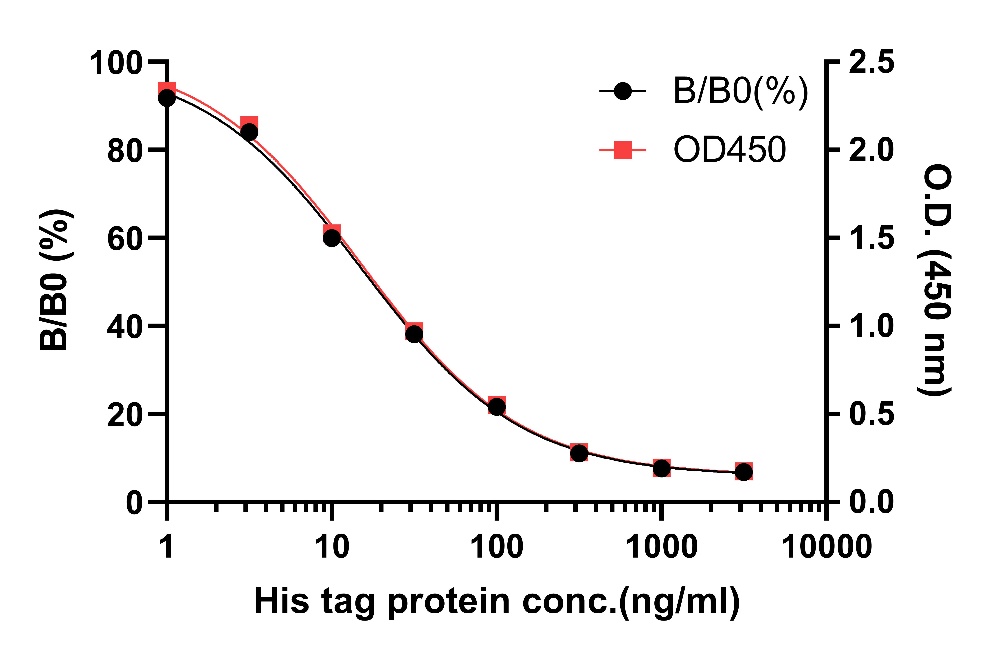
Standard curve Example of His tag protein (molecular weight of 20 kDa) standard curve in Assay Diluent #1.
His Tag ELISA Kit (Advanced)
His Tag ELISA Kit (Advanced)
Price:
Regular price
$508 USD
Regular price
Sale price
$508 USD
Unit price
per
For shipping services or bulk orders, you may request a quotation.
Secure checkout with

View full details
Product Details
Product Details
Product Specification
| Usage |
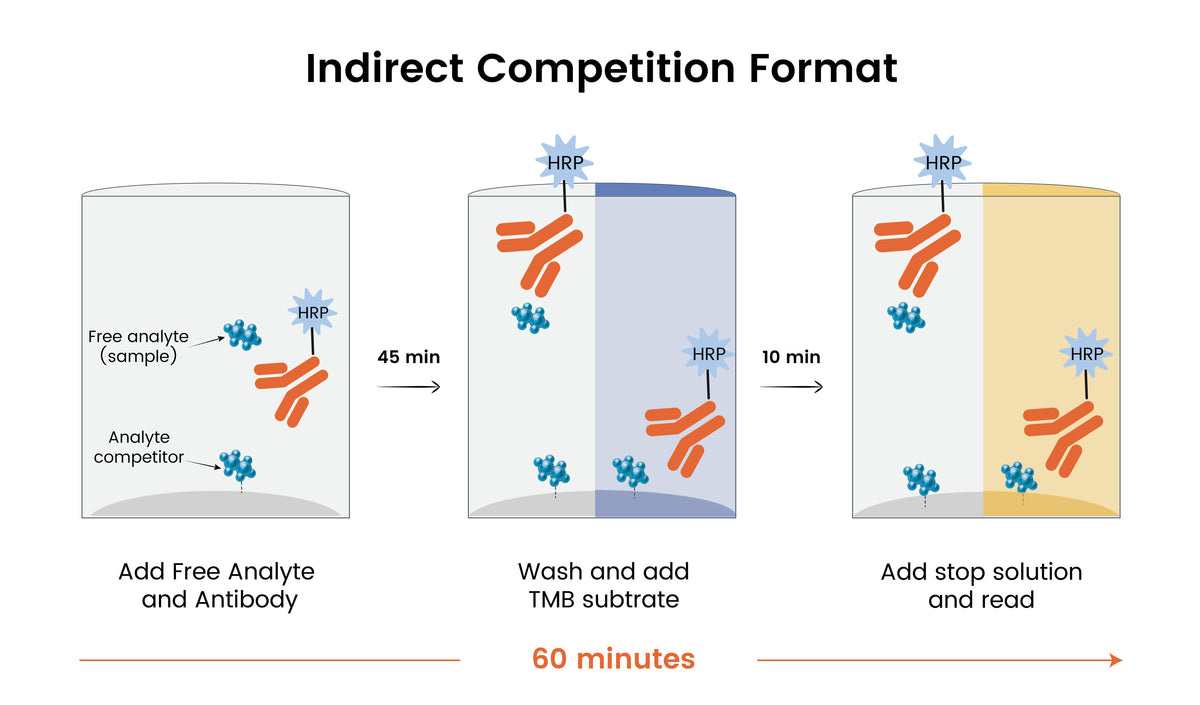
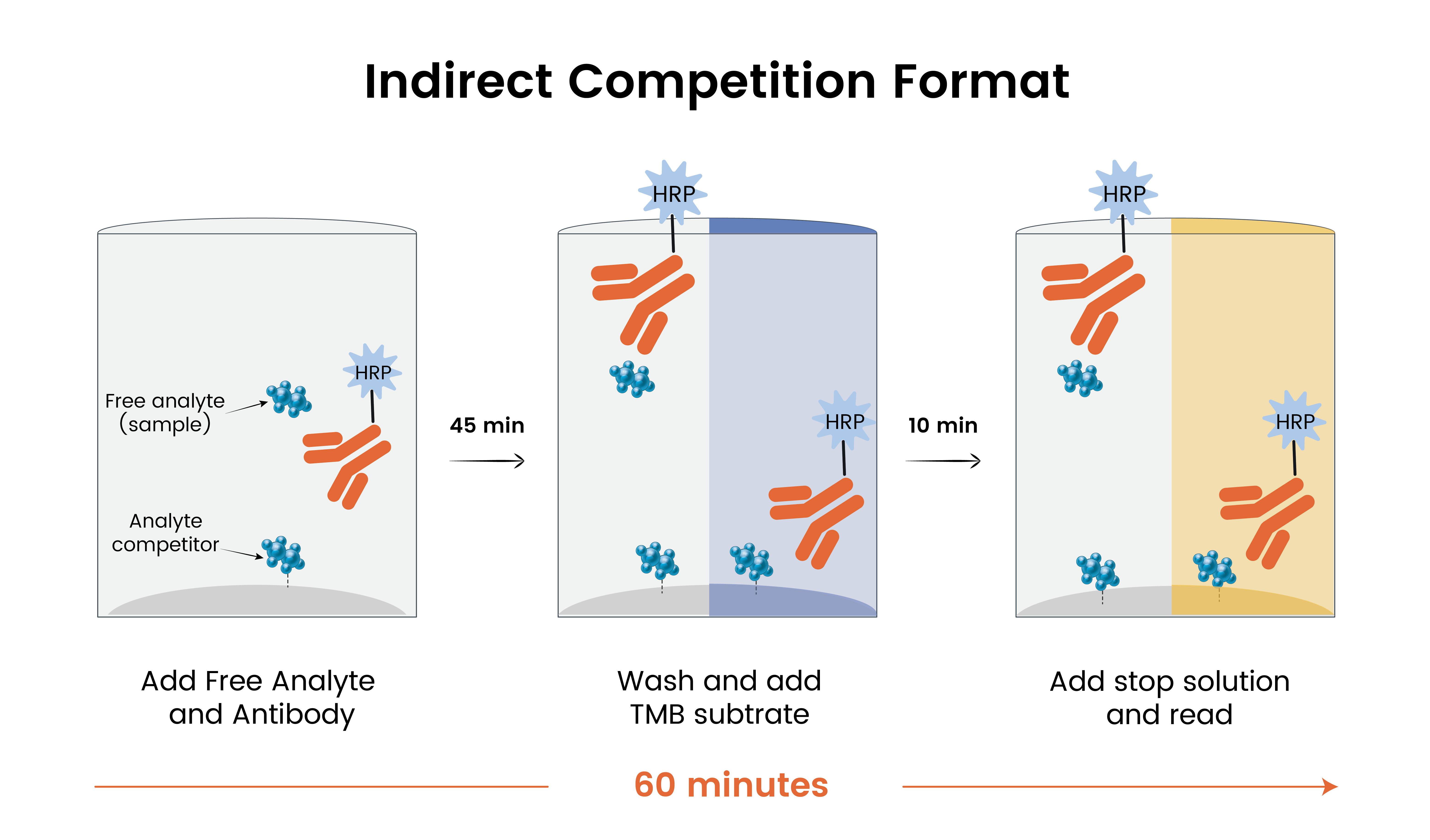
Users need to bring their own materials, but kits are not provided Microplate reader capable of measuring absorbance at 450nm or 650nm Enzyme plate constant temperature oscillator Multichannel and Single Channel Pipettes Deionized water Centrifuge tube or dilution plate Reagent Preparation Please return all reagents to room temperature before use. This kit contains the amount of reagent required for a 96-well plate. 1 × Wash Buffer: A 10 × Wash Buffer was diluted with deionized water to prepare a 1 × Wash Buffer. Mix 10ml of 10X Wash Buffer with 90ml of deionized water to make 100ml of 1X Wash Buffer and gently stir well. Note: 10X Wash Buffer may have crystallization when stored at 2-8 º C, which is normal. The crystallization will be completely dissolved after return to room temperature. Please wait until the crystals are completely dissolved before diluting with deionized water. 1X HRP conjugated anti-His tag Antibody: HRP conjugated anti-His tag Antibody was diluted with Assay Diluent # 1 The mother liquor was prepared as a 1X working solution. For example, 500 µ L of 10X HRP conjugated anti-His tag Antibody and 4.5 mL Assay Diluent # 1 Mix evenly and formulate 5ml 1X HRP conjugated anti-His tag Antibody. Standard preparation A new set of standards was formulated for each experiment. The lyophilized standard powder is dissolved as the standard mother liquor and can only be used on the same day. The standard working solution is ready for use. It is recommended to use the working solution within one hour after it is prepared. If it exceeds one hour, it needs to be reprepared. The formulation process of the recommended standard curve for this kit is described below. IMPORTANT INFORMATION: The identified mass and redissolved volume of standard powder in each tube are marked on the label of the standard. After short centrifugation before opening the cap, add Assay Diluent to dissolve the volume identified on the tube label to obtain the first concentration solution of His tag protein standard. Dissolve thoroughly at room temperature for 10 minutes and mix gently. 1. Use a marker to mark a row (8 wells) of 8 centrifuge tubes or dilution plates, which are standard working solutions 1-8 respectively. 2. Add the dissolved standard directly into tube No. 1/well, and add 216μL Assay Diluent to tubes No. 2-8/well. 3. Prepare the standard gradient according to the figure below. Standard # 8 is a blank control; 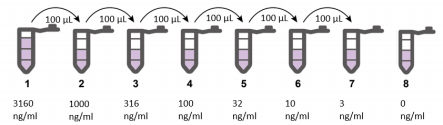 Sample Preparation Cell culture supernatants or lysed cell homogenate supernatants were centrifuged at 2000 × g for 10 minutes to remove debris. The supernatant can be loaded directly after collection or diluted with Assay Diluent. Store undiluted samples at or below-20 °C. Avoid repeated freeze-thaw cycles. Enzyme plate preparation The 96-well detachable enzyme plate is ready to use and can be loaded directly without other processing. The plate type is 12 1 x 8 slats. Unused slats should be immediately returned to the foil pouch containing the desiccant package, resealed and stored at 2-8 °C. Experimental procedure All materials and reagents will need to be equilibrated to room temperature before use. It is recommended that all standards, controls and samples be tested in duplicate in parallel wells. 1) Prepare all reagents, working standards and samples according to the instructions on the previous page. 2) Remove the excess enzyme labeled strips from the removable plate frame, place them back in the foil bag containing the desiccant package, reseal and return to storage at 2-8 º C. 3) Take 50 µ L of sample or standard and add to the corresponding well. 4) In each well 50 µ L of 1X HRP conjugated anti-His tag Antibody. 5) Apply a sealing film and incubate for 45 minutes on an enzyme label plate constant temperature shaker with the setting conditions of "rotational speed of 500 rpm and temperature of 25 °C". 6) Wash each well with 300 µ L of 1X Wash Buffer three times. After the last wash, turn the board upside down and gently pat it several times on a clean paper towel to remove any excess liquid. 7) Add 100 µ L of TMB substrate to each well, and develop color for 10 minutes on a 500 rpm plate thermostatic shaker protected from light. Given the variability of laboratory environmental conditions, the optimal color development time may vary between 5 and 15 minutes. Note: After adding the stop solution, the color changes from blue to yellow, and the signal intensity is increased by about 3 times. To avoid signal saturation, you can pre-read the plate before adding the stop solution, and proceed to the next operation before the high concentration of the standard reaches blue O.D.650 = 1.0. 8) Add 100 µ L of stop solution to each well, mix well and determine the OD450 of each well within 30 minutes using a microplate reader set at 450 nm. If wavelength correction is available, set to 540nm or 570nm and the calibrated OD value is the measured value of 450 nm minus the measured value of 540 nm or 570 nm. Results Calculation Take the average value of replicate readings of each standard and sample and record it as the B value of the standard or sample, and record the average value of replicate readings of zero in the standard curve column as the B0 value of this experiment. Convert the OD value to Percent Bound (B/B0), i.e. (B/B0) × 100% Standard curves and scaled sample concentrations were created by using computer software capable of generating four-parameter logic (4-PL) curve fits. If the sample is diluted and then loaded, the concentration converted from the standard curve must be multiplied by the dilution factor to obtain the actual concentration of the sample. 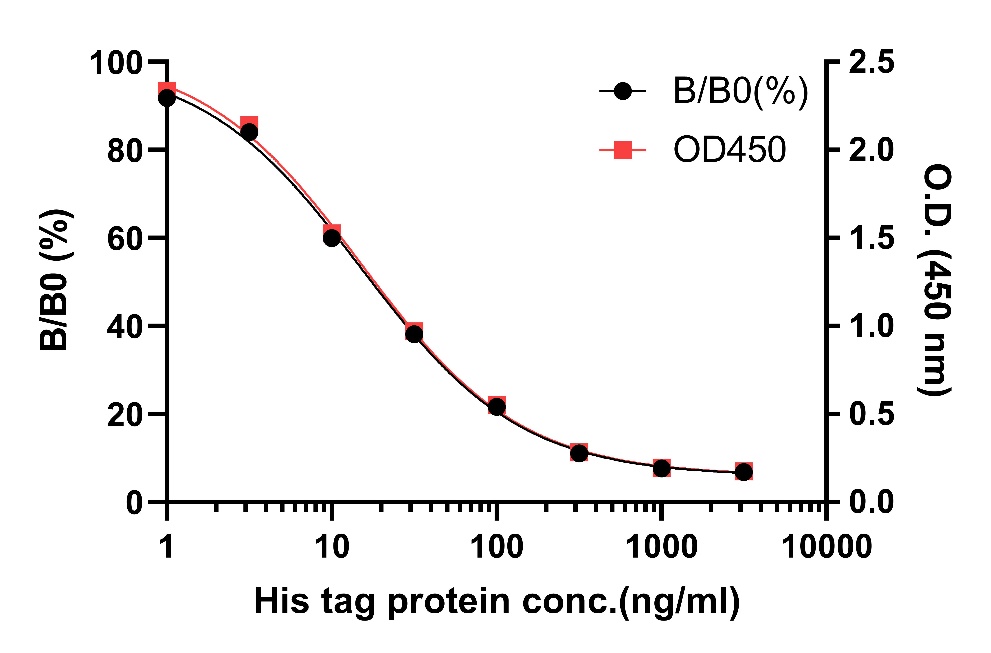
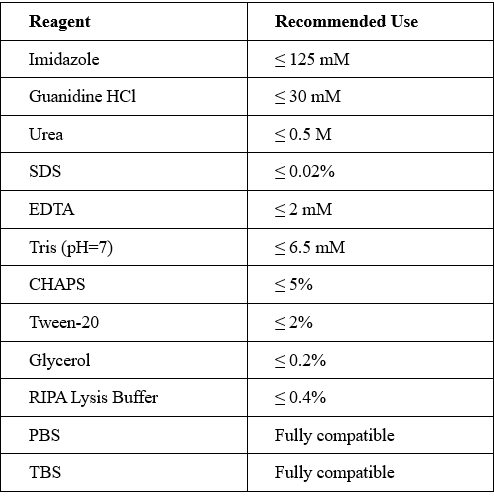
Reagent Compatibility |
|||||||||||||||||||||||||||
| Description | This kit adopts competitive ELISA method, which can specifically detect HIS tag protein, and is used for quantitative detection of recombinant protein with HIS tag. | |||||||||||||||||||||||||||
| Composition |
|
|||||||||||||||||||||||||||
| Background | A polyhistidine-tag is an amino acid motif in proteins that typically consists of at least six histidine (His) residues, often at the N- or C-terminus of the protein.The total number of histidine residues may vary in the tag from as low as two, to as high as 10 or more His residues. Histidine (His)-tag is widely used for affinity purification of recombinant proteins, but the yield and purity of expressed proteins are quite different. This kit is developed for rapid and high throughput detection of His-tagged proteins. | |||||||||||||||||||||||||||
| Storage Temp. | Store at 4°C for one year. Avoid repeated freeze/thaw cycles. |
Picture
Picture
Immunohistochemistry
Reagent Compatibility
Protocol Diagram