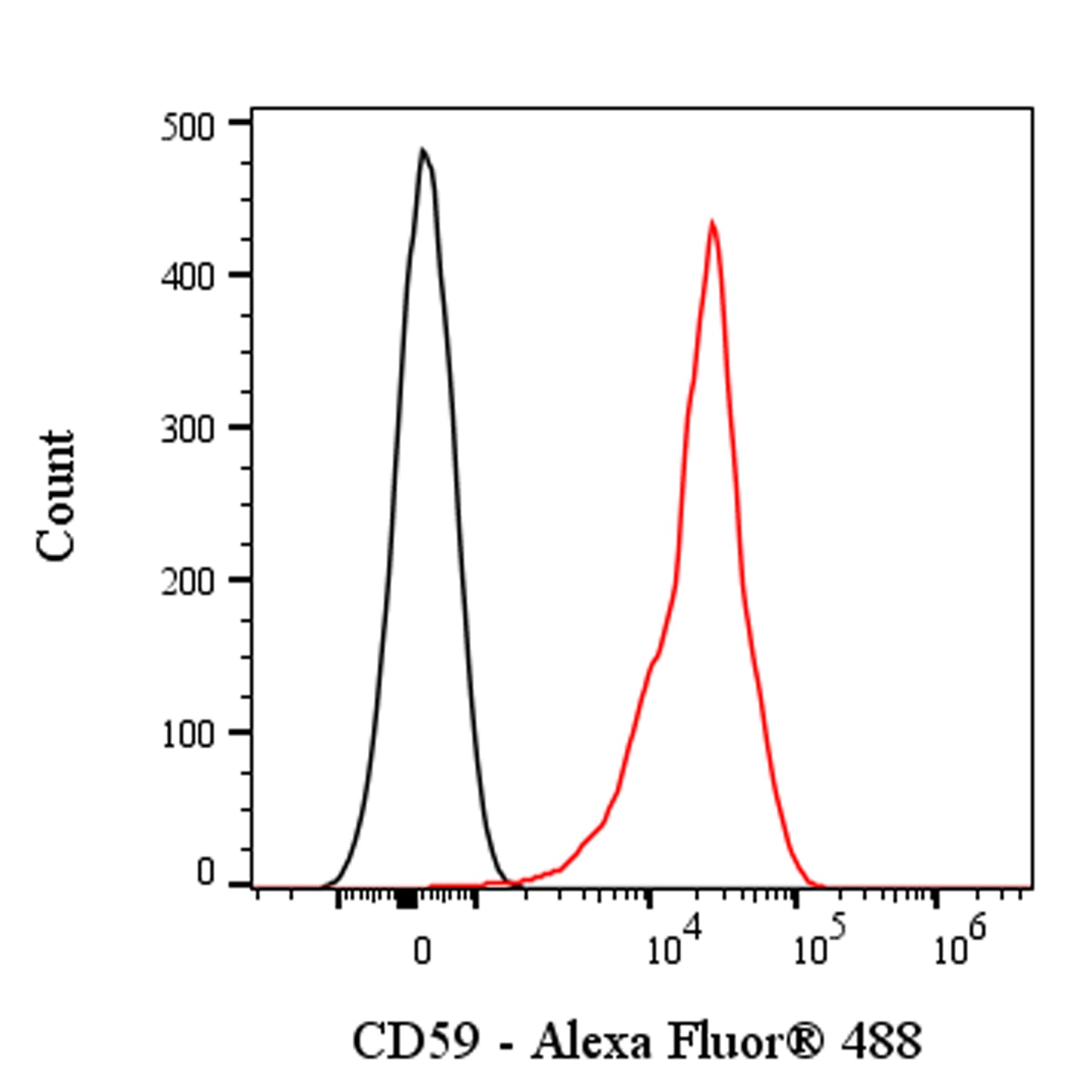
Flow cytometric analysis of Human CD59 expression on human PBMCs (human peripheral blood mononuclear cells). Human PBMCs were stained with either Alexa Fluor® 488 Mouse IgG2a Isotype Control (black line histogram) or SDT Alexa Fluor® 488 Mouse Anti-Human CD59 Antibody (red line histogram) at 5 μl/test. Flow cytometry and data analysis were performed using Agilent NovoCyte Quanteon and FlowJo™ software.
Alexa Fluor® 488 Mouse Anti-Human CD59 Antibody (S-R567)
Alexa Fluor® 488 Mouse Anti-Human CD59 Antibody (S-R567)
Price:
Regular price
$145 USD
Regular price
Sale price
$145 USD
Unit price
per
For shipping services or bulk orders, you may request a quotation.
Secure checkout with

View full details
Product Details
Product Details
Product Specification
| Host | Mouse |
| Antigen | CD59 |
| Synonyms | CD59 glycoprotein; 1F5 antigen; 20 kDa homologous restriction factor (HRF-20; HRF20); MAC-inhibitory protein (MAC-IP); MEM43 antigen; Membrane attack complex inhibition factor (MACIF); MIC11; MIN1; MIN2; MIN3; MSK21 |
| Location | Secreted, Cell membrane |
| Accession | P13987 |
| Clone Number | S-R567 |
| Antibody Type | Mouse mAb |
| Isotype | IgG2a |
| Isotype Control | S0B8029 |
| Application | FCM |
| Reactivity | Hu |
| Positive Sample | Human PBMC |
| Purification | Protein A |
| Concentration | 0.2 mg/ml |
| Conjugation | Alexa Fluor® 488 |
| Physical Appearance | Liquid |
| Storage Buffer | PBS, 1% BSA, 0.09% sodium azide |
| Stability & Storage | 12 months from date of receipt / reconstitution, 2 to 8 °C as supplied |
Dilution
| application | dilution | species |
| FCM | 5μl per million cells in 100μl volume | Hu |
Background
CD59, also known as the membrane attack complex inhibition factor (MACIF), is a membrane-bound protein that plays a critical role in the regulation of the complement system, which is part of the immune system. It is the primary inhibitor of membrane attack complex (MAC) formation. It prevents the formation of pores in the membranes of cells, thereby protecting them from complement-mediated lysis. CD59 inhibits the formation of MAC by binding to C8 and/or C9, which are components of the complement system. This binding prevents the recruitment of additional C9 molecules into the complex, thus inhibiting the formation of the pore. CD59 deficiency can lead to conditions such as paroxysmal nocturnal hemoglobinuria (PNH), which is characterized by intravascular hemolysis and hemoglobinuria. Low levels of CD59 are also associated with autoimmune diseases like diabetes and multiple sclerosis.
Picture
Picture
FC