Immobilized Human PIGF Protein, His Tag at 10 μg/mL (100 μL/well) can bind Recombinant Human VEGFR1 (C-Fc) with EC50 of 15.9-18.4 ng/ ml.
Human PlGF Protein, His Tag
Human PlGF Protein, His Tag
Price:
Regular price
$355 USD
Regular price
Sale price
$355 USD
Unit price
per
For shipping services or bulk orders, you may request a quotation.
Secure checkout with

View full details
Product Details
Product Details
Product Specification
| Species | Human |
| Synonyms | PLGF |
| Accession | P49763-2 |
| Amino Acid Sequence | Protein sequence (P49763-2, Leu19-Arg149, with C-His Tag) LPAVPPQQWALSAGNGSSEVEVVPFQEVWGRSYCRALERLVDVVSEYPSEVEHMFSPSCVSLLRCTGCCGDENLHCVPVETANVTMQLLKIRSGDRPSYVELTFSQHVRCECRPLREKMKPERCGDAVPRR |
| Expression System | HEK293 |
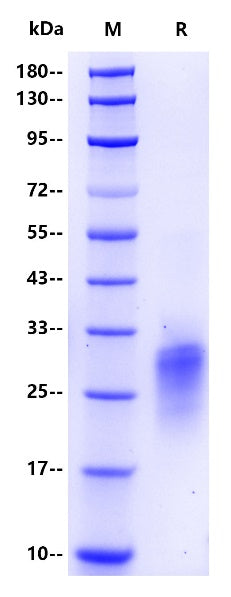
| Molecular Weight | Predicted MW: 16.4 kDaObserved MW: 30 kDa |
| Purity | >95% by SDS-PAGE |
| Endotoxin | <1EU/μg |
| Conjugation | Unconjugated |
| Tag | with C-His Tag |
| Physical Appearance | Lyophilized powder |
| Storage Buffer | Lyophilized from a 0.2 μm filtered solution of PBS, pH7.4 with 3% trehalose. |
| Reconstitution | Reconstitute no more than 1 mg/mL according to the size in deionized water after rapid centrifugation. |
| Stability & Storage | 12 months from date of receipt, -20 to -70 °C as supplied. |
Background
Placental Growth Factor (PIGF) is a key angiogenic protein belonging to the vascular endothelial growth factor (VEGF) family. It is primarily produced by the placenta and is crucial for normal placental vascular development during pregnancy. Unlike VEGF-A, PIGF specifically binds to the VEGFR-1 receptor, modulating vascular growth and inflammation. Its levels are typically low in healthy adults but significantly elevated in pre-eclampsia, a serious pregnancy complication, making it a critical diagnostic biomarker. Beyond obstetrics, PIGF is implicated in pathological angiogenesis, such as in cancer and ischemic diseases, where it promotes blood vessel growth, positioning it as a potential therapeutic target in these conditions.
Picture
Picture
Bioactivity
SDS-PAGE
2μg(R: reducing conditions)