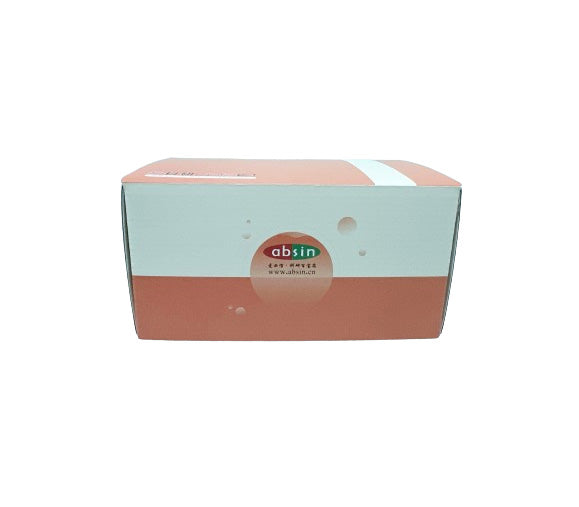
Human Intestinal Organoid Culture Medium Kit
Human Intestinal Organoid Culture Medium Kit
Price:
Regular price
$1,032 USD
Regular price
Sale price
$1,032 USD
Unit price
per
For shipping services or bulk orders, you may request a quotation.
Secure checkout with

View full details
Product Details
Product Details
Product Specification
| Usage |
1 , Original generation: ( 1 The removed tissue must be placed in a pre-cooled ( 2-8°C Tissue preservation solution E The sample bottles were quickly transported to a clean laboratory for tissue processing and cell separation, photographed, and information recorded. ( 2 Prepare several petri dishes and add... 4℃ Precooled primary culture buffer B Backup. ( 3 The sample bottles were sterilized, and the tissues were placed in petri dishes using primary culture buffer. B After cleaning three times, remove impurities. Use ophthalmic scissors or a scalpel to remove the intestinal mucosa of the small intestine tissue and cut it into a volume of approximately... 1-3mm3 Tissue blocks. ( 4 Digestive fluid from normal human intestinal primary tissue for tissue use C digestion, 4℃ oscillation digestion 10-20min (Observe the digestion situation at any time during the digestion process). ( 5 Take a small amount of liquid and observe it under a microscope. A large number of individual cells or 70μm After the following cell clusters, add three times the volume of primary culture buffer B Termination of digestion. ( 6 ) Use 100μm The filtrate is filtered using a sieve with a certain pore size, and the filtrate is collected and then... 300g enrichment centrifugation 5min Then remove the supernatant and add primary culture buffer B Resuspend and centrifuge. ( 7 Matrix rubber calculation: No. 6 After the step, observe the collected tissue volume and add 25 Matrix glue with twice the tissue volume ( abs9495 Resuspend the slab. ( 8 ) 24 Taking well cell culture plates as an example, each well is dispensed with gel. 25μL Tissue matrix glue mixture for board laying ( 4℃ (Next operation). ( 9 Place the prepared culture plate in... 37℃ Incubator 10-15min Gelatinization, addition of human normal intestinal organoid medium A (Return to room temperature) for incubation. 2 Organoid subculture: ( 1 Remove the culture medium with a pipette and add to each well. 1-2mL 4℃ organoid subculture buffer G placement 2min 。 ( 2 Gently blow the matrix glue with a pipette to collect... 15mL In the centrifuge tube, 4℃ standing 10min 。 (each 6-8 (The holes are a group) ( 3 ) a : Insufficient number or small volume of organoids: centrifuge 5min Discard the supernatant and add an appropriate amount of organoid subculture buffer G Resuspend and move in 1.5mL centrifuge tube, 300g centrifuge 5min Discard the liquid for the first 4 step. b When the number or volume of organoids is large: Centrifuge 5min Discard the supernatant and add an appropriate amount of organoid passage digestion solution. D digestion 2-3min Add organoid subculture buffer G Terminate digestion and centrifuge 5min Discard the mixture and add an appropriate amount of organoid subculture buffer G Resuspend and move in 1.5mL centrifuge tube, 300g centrifuge 5min Discard the liquid for the first 4 step. ( 4 After organoids were collected, matrix gel was added for resuspension, and each well was resuspended. 25μL Matrix glue is laid on 24 In well cell culture plates, place in an incubator. 10-15min Add 500μL human normal intestinal organoid culture medium A 。 3 Organoid cryopreservation: ( 1 Remove the culture medium with a pipette and add to each well. 1-2mL 4℃ organoid subculture buffer G placement 2min 。 ( 2 Gently blow the matrix glue with a pipette to collect... 15mL In the centrifuge tube, 4℃ standing 10min 。 (each 6-8 (The holes are a group) ( 3 Centrifugation 5min Discard the supernatant and add an appropriate amount of organoid subculture buffer G Hanging again, 300g centrifuge 5min Discard the liquid. ( 4 Add an appropriate amount of organoid cryopreservation solution. F Gently blowing and resuspending, 24 Taking well cell culture plates as an example: the density is 2 Individual hole cryopreservation 1 Tubes, volume per tube 1.4mL 。 ( 5 Mark the information, cool it down procedurally, and then transfer it to liquid nitrogen for long-term storage. 4 Organoid resuscitation: ( 1 ) take 10ml organoid subculture buffer G At 15mL In the centrifuge tube. ( 2 Remove the frozen organoid cells from the liquid nitrogen tank and quickly place them in... 37℃ Melt in a water bath. ( 3 During the water bath thawing process, the freezing tube needs to be gently shaken to ensure that the cryopreservation solution is... 1-2min It completely dissolves inside. ( 4 ) Rapidly transfer the lysed organoid cells to 15mL Centrifuge tube, gently blow with a pipette 6-8 next time, 300g centrifuge 5min The supernatant is then removed and the organoid cell pellet is collected. Add an appropriate amount of organoid subculture buffer G Resuspend and move in 1.5mL centrifuge tube 300g centrifuge 5min 。 ( 5 Resuspend the matrix gel, per well 25μL Matrix glue is laid on 24 In well cell culture plates, place in an incubator. 10-15min Gelation, addition 500μL human normal intestinal organoid culture medium A 。 |
||||||||||||||||
| Description | Human normal intestinal organoid culture medium is a culture medium that promotes the formation and amplification of human normal intestinal organoids in vitro. This product is a sterile liquid mixture system containing amino acids, vitamins, organic and inorganic compounds, and growth factors essential for maintaining the growth of the target cells. The unique formulation of this medium can provide a suitable nutritional environment required by cells to promote the in vitro growth and expansion of normal human intestinal organoids. Try Kit Composition:
|
||||||||||||||||
| Storage Temp. | Store at -20°C with a shelf life of 12 months. |
Picture
Picture
Immunohistochemistry