
The Evolution of Immunohistochemistry: From Fundamental Research to Precision Medicine Applications

Immunohistochemistry (IHC) stands as an irreplaceable cornerstone in contemporary biomedical and life science research, embodying the persistent exploration of life’s complexities by the global scientific community. Originating from the initial revelation of antibody-antigen interactions, this revolutionary technique has matured into a core diagnostic and research tool for precision medicine, with every developmental milestone driven by the innovation and dedication of researchers worldwide. As a leading provider of life science reagents, ANT BIO PTE. LTD. integrates cutting-edge IHC technological advancements into its product portfolio, delivering professional, reliable solutions to empower breakthroughs in both basic research and clinical translational medicine.
1. The Foundational Discovery: Antibodies and Early Immunological Recognition
The identification of antibodies represents a landmark achievement in life sciences. During long-term research on disease resistance, scientists clarified the pivotal role of antibodies in immune defense mechanisms. Early observations of precipitate formation in antibody-antigen reactions laid the groundwork for in-depth exploration of antibody properties. In 1920, Michael Heidelberger, a pioneer in modern immunology, verified the protein nature of antibodies via nitrogen detection assays, despite technical limitations of the era. Subsequent innovations, including azo dye staining and antibody labeling technologies, established the theoretical and technical foundation for the birth of IHC, marking the initial step from immunological theory to practical detection techniques.
2. Technological Breakthrough: The Development of Labeling Systems
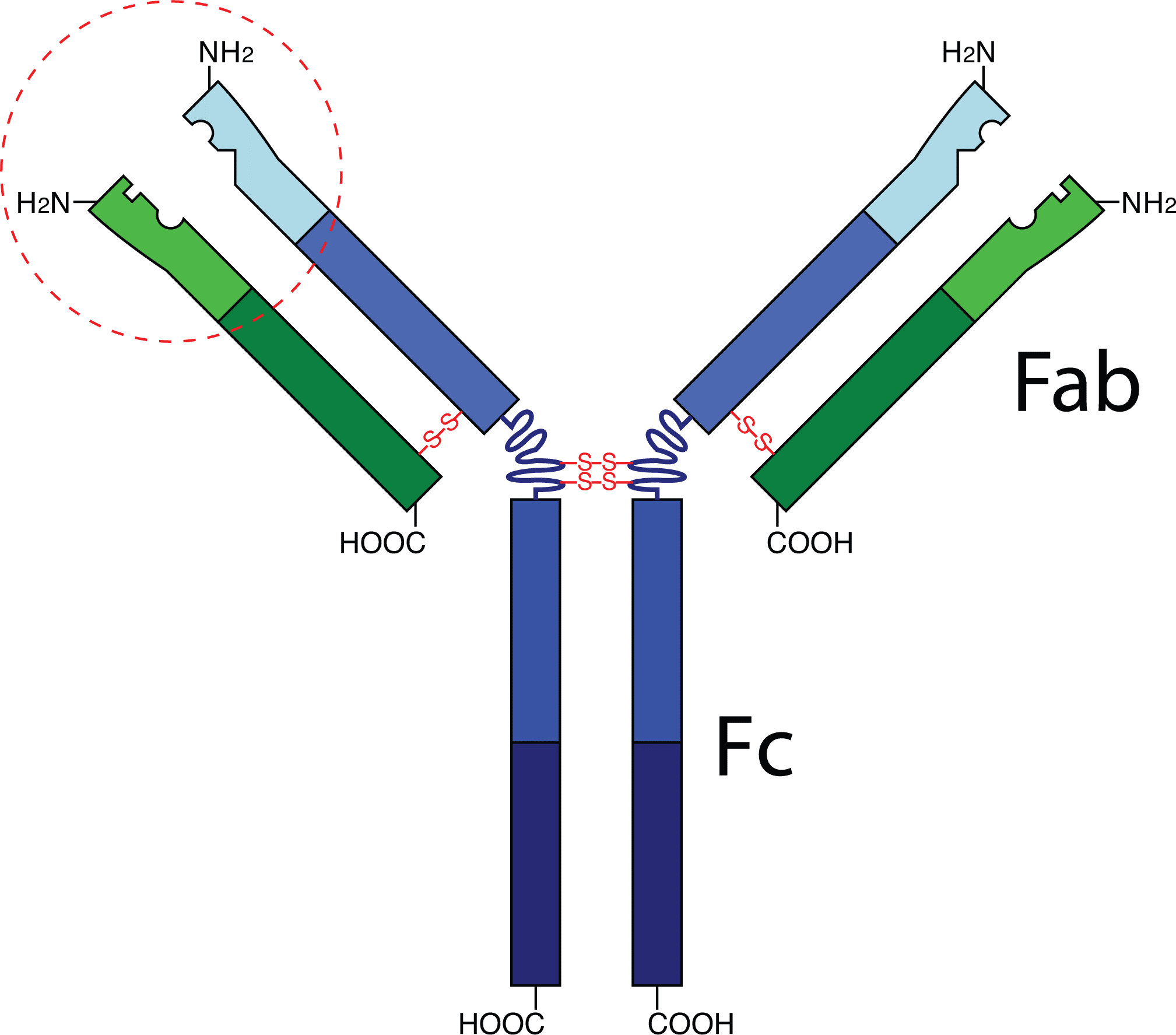
The emergence of antibody labeling technologies catalyzed the rapid advancement of IHC. Early conventional dye labeling suffered from weak signal output, until 1941 when A.H. Coons pioneered fluorescein isocyanate labeling, enabling the visualization of target antigens under ultraviolet light and inaugurating the era of fluorescent IHC. Subsequent optimization of fluorescein isothiocyanate (FITC) addressed stability and specificity challenges, while the development of direct labeling methods targeting antibody Fc fragments standardized core IHC protocols. These technological leaps transformed IHC from a conceptual technique into a practical laboratory tool for tissue and cellular antigen localization.
3. Iterative Innovation: From Traditional Methods to High-Sensitivity IHC Technologies
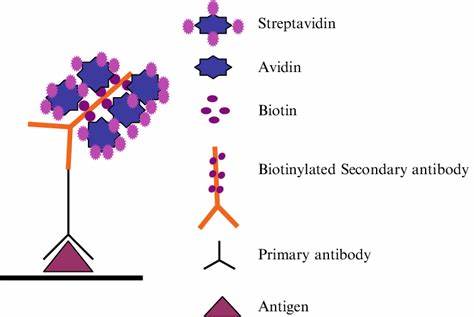
To overcome the high cost and low efficiency of direct labeling, the indirect IHC method was developed, utilizing secondary antibodies for signal amplification and cost reduction. The 1960s witnessed the diversification of fluorescent probes, alongside the rise of enzyme-labeled IHC technologies. Horseradish peroxidase (HRP) replaced unstable alkaline phosphatase as the preferred enzymatic label, enabling IHC detection under ordinary light microscopes. Further innovations including the PAP, ABC, SP, and SABC methods continuously improved detection sensitivity and reduced non-specific binding, making IHC suitable for routine pathological diagnosis and high-precision research scenarios.
4. Future-Oriented: Modern IHC and Clinical Translation
Entering the 21st century, enzyme polymer-based IHC technologies (EnVision, PowerVision) have become mainstream, offering enhanced specificity and sensitivity. Driven by precision medicine, IHC is now widely applied in tumor typing, pathological analysis, and drug development. ANT BIO PTE. LTD. aligns with this developmental trend, launching a full range of IHC reagents, recombinant proteins, and detection kits to support high-sensitivity, high-specificity experimental results, bridging basic research and clinical applications.
ANT BIO PTE. LTD. IHC-Related Core Product Portfolio
| Product Code | Product Name | Specification | Price (USD) |
|---|---|---|---|
| S0C2008 | DAB Reagent | 5ml, In stock | $135 |
| S0C2031 | Anti-Rabbit HRP-DAB IHC detection kit (Goat Host) | 5ml (50 slides) | $85 |
| S0C2011 | Anti-Rabbit and Mouse HRP-DAB IHC detection kit (2-step, Goat Host) | 5ml (50 slides), In stock | $150 |
| S0C1001 | Anti-Rabbit and Mouse HRP&DAB IHC detection kit (Goat Host) | 5ml (50 slides) | $170 |
| UA010674 | Biotinylated DPP4/CD26 His&Avi Tag Protein, Human (HEK293) | 25μg, In stock | $470 |
| UA010210 | DPP4/CD26 Fc Chimera Protein, Human (HEK293) | 100μg | $750 |
| UA010343 | DPP4/CD26 His Tag Protein, Cynomolgus (HEK293) | 100μg | $720 |
| UA010162 | DPP4/CD26 His Tag Protein, Human (HEK293) | 100μg, In stock | $720 |
| UA010221 | DPP4/CD26 Protein, Human (HEK293) | 100μg | $720 |
| UA011135 | ROBO1/DUTT1 His Tag Protein, Human (HEK293) | 25μg, In stock | $215 |
| UA010479 | ROBO4 His Tag Protein, Human (HEK293) | 100μg, In stock | $505 |
| UA010455 | ROBO4 His Tag Protein, Mouse (HEK293) | 100μg, In stock | $450 |
ANT BIO PTE. LTD. – Empowering Scientific Breakthroughs
At ANTBIO, we are committed to advancing life science research through high-quality, reliable reagents and comprehensive solutions. Our specialized sub-brands (Absin, Starter, UA) cover a full spectrum of research needs, from general reagents and kits to antibodies and recombinant proteins. With a focus on innovation, quality, and customer-centricity, we strive to be your trusted partner in unlocking scientific mysteries and driving medical progress. Explore our product portfolio today and elevate your research to new heights.
Disclaimer
This article was partially created with the assistance of artificial intelligence. If any content involves copyright or intellectual property issues, please inform us, and we promise to verify and remove it immediately.


